Junior Padel Rackets

Original price was: ÂŁ74.99.Current price is: ÂŁ33.99.
55%
Original price was: ÂŁ110.00.Current price is: ÂŁ82.99.
25%
Original price was: ÂŁ82.99.Current price is: ÂŁ41.99.
50%
Original price was: ÂŁ82.99.Current price is: ÂŁ66.99.
20%
Original price was: ÂŁ93.00.Current price is: ÂŁ43.00.
54%

Get your kid ready for the court with a proper junior padel racket. Check out our tried-and-true suggestions and practical purchase tips to help you make the best decision for your young athlete!

Differences Between Adult and Junior Padel Rackets

Parents have a typical behavior of going one size extra for shoes, clothes, and more for their child. That typical mindset may save a lot of money in the future, saving them from repurchases. This mindset applies to buying kids’ padel rackets also.

Parents frequently ask if they could potentially save money by getting their child an adult racket. The answer is always no, and here’s why adult padel rackets are different from kids’ padel rackets. 

An adult racket’s weight is the primary distinction between it and junior padel rackets. Padel rackets for adults weigh between 360 and 390 grams. Junior padel rackets typically weigh between 240 and 340 grams, depending on the child’s age. That’s not simply a figure. Simply said, you won’t give your child a hefty adult racket and convert his enjoyment into arm discomfort.

Grip size has a wide-ranging impact. Adult grips measure approximately 4 1/4 inches in circumference. Kids’ padel rackets have smaller grips ranging from 3 3/4 to 4 inches. When the grip is too big, youngsters cannot grasp it firmly. The racket bends upon contact. They compensate by squeezing too hard, resulting in blisters and tennis elbow.

Balanced distribution is another concerning factor. It matters more than you would imagine. Most padel rackets for youngsters have low or medium balance, which means the weight stays close to the handle. This makes the racket simpler to swing and manage. On the other hand, adult power rackets often feature a head-heavy balance to generate smash momentum. Children just do not have the arm strength or timing to safely use these designs.

Top Padel Rackets for Children

Want a shortlist of the best junior padel rackets? Check out our top 5 padel rackets for children:

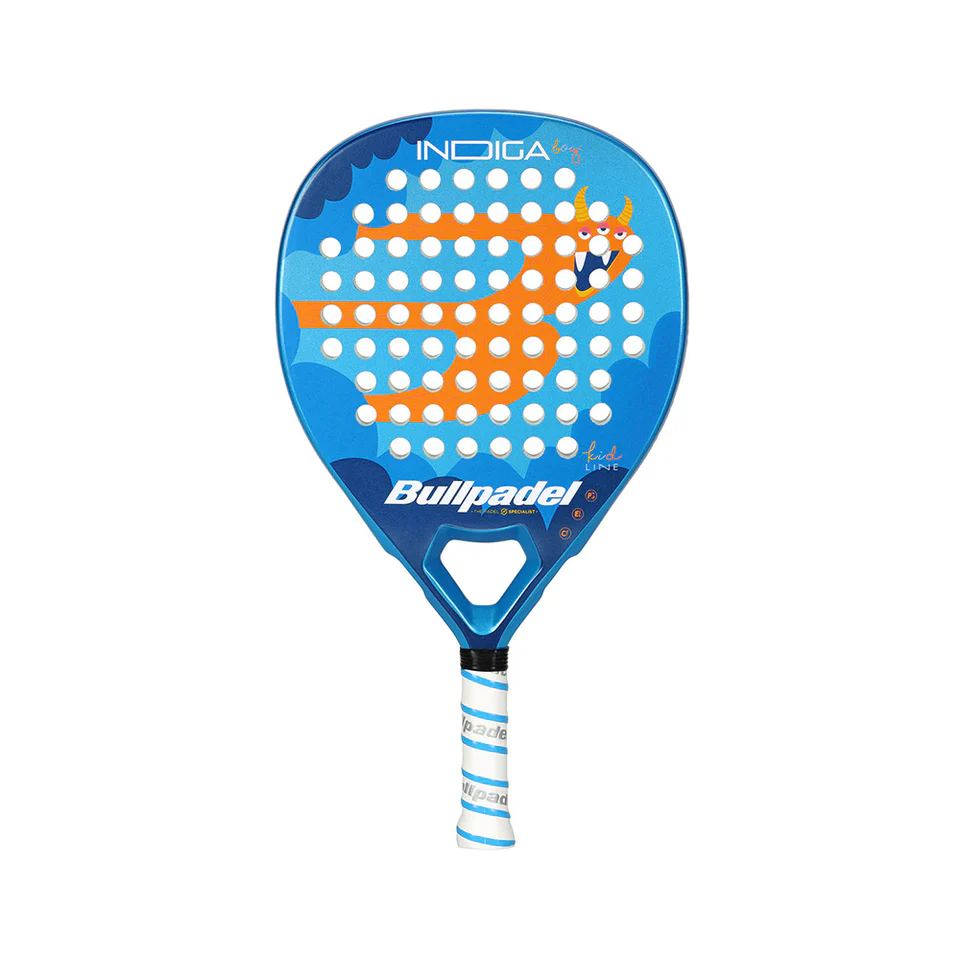
bullpadel indiga boy 2026 padel racket

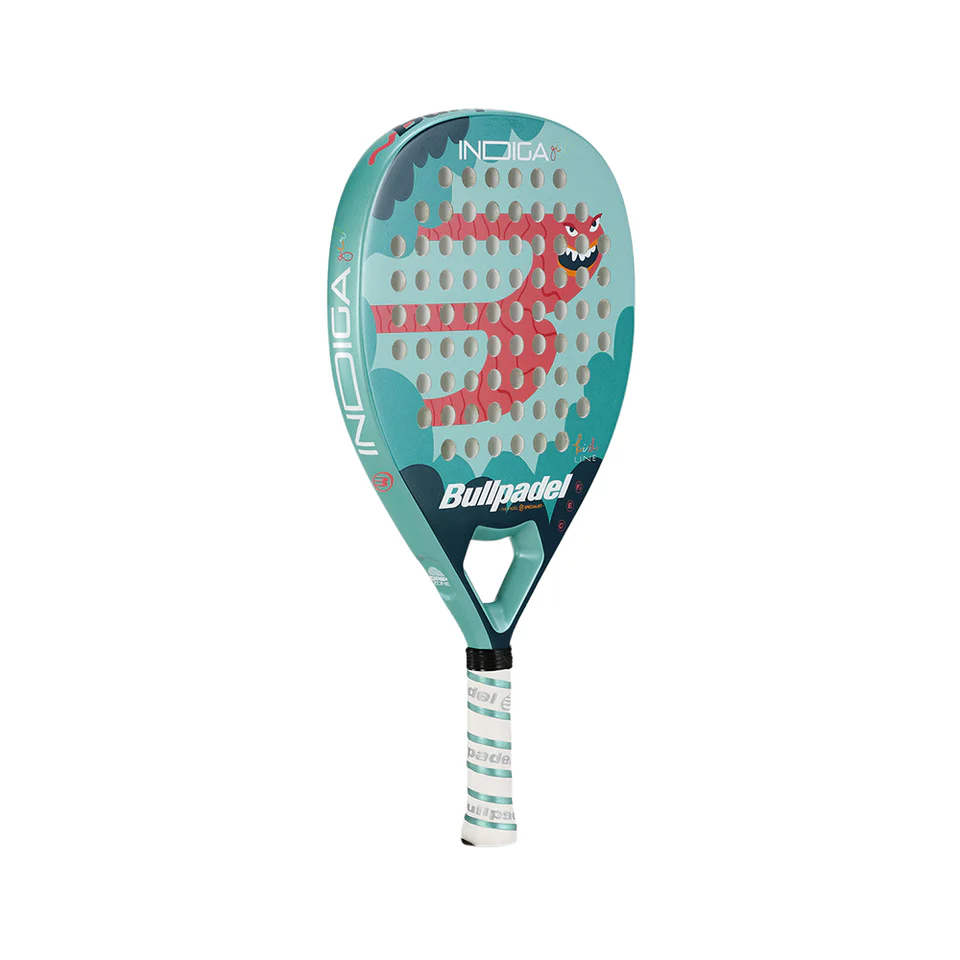
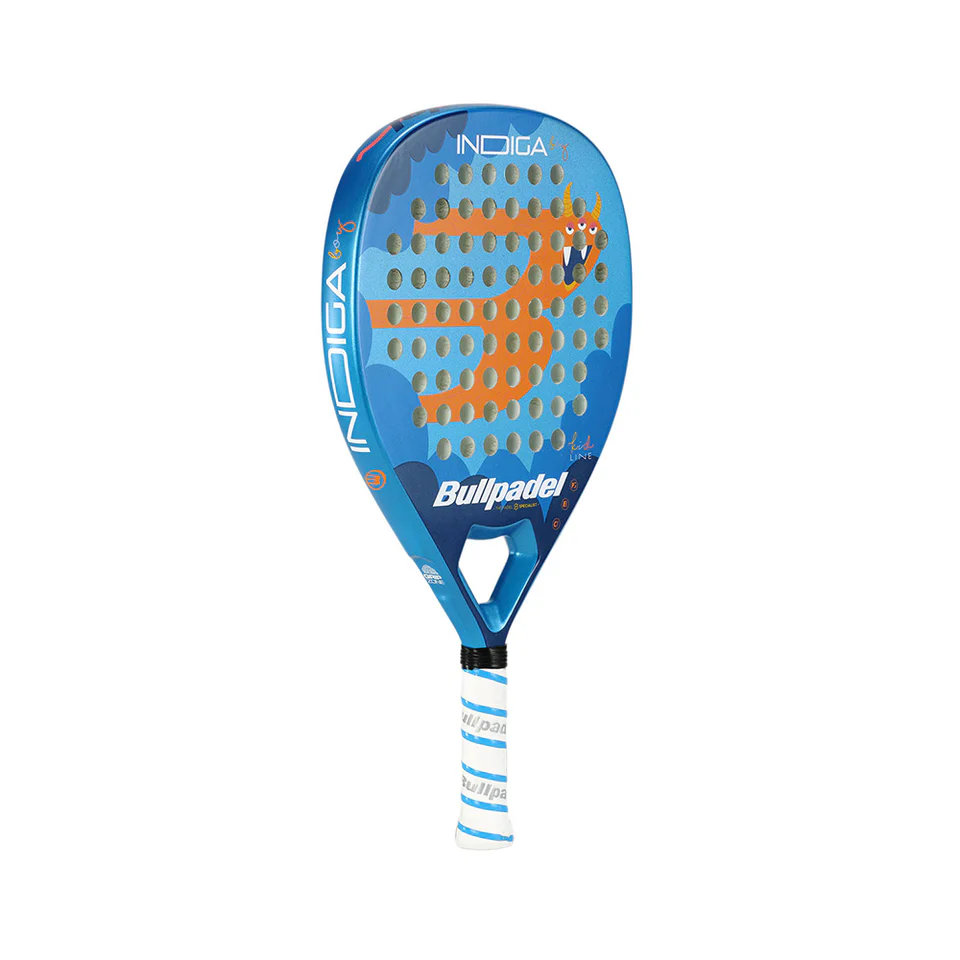
Bullpadel Indiga Junior Boy/Girl 2026

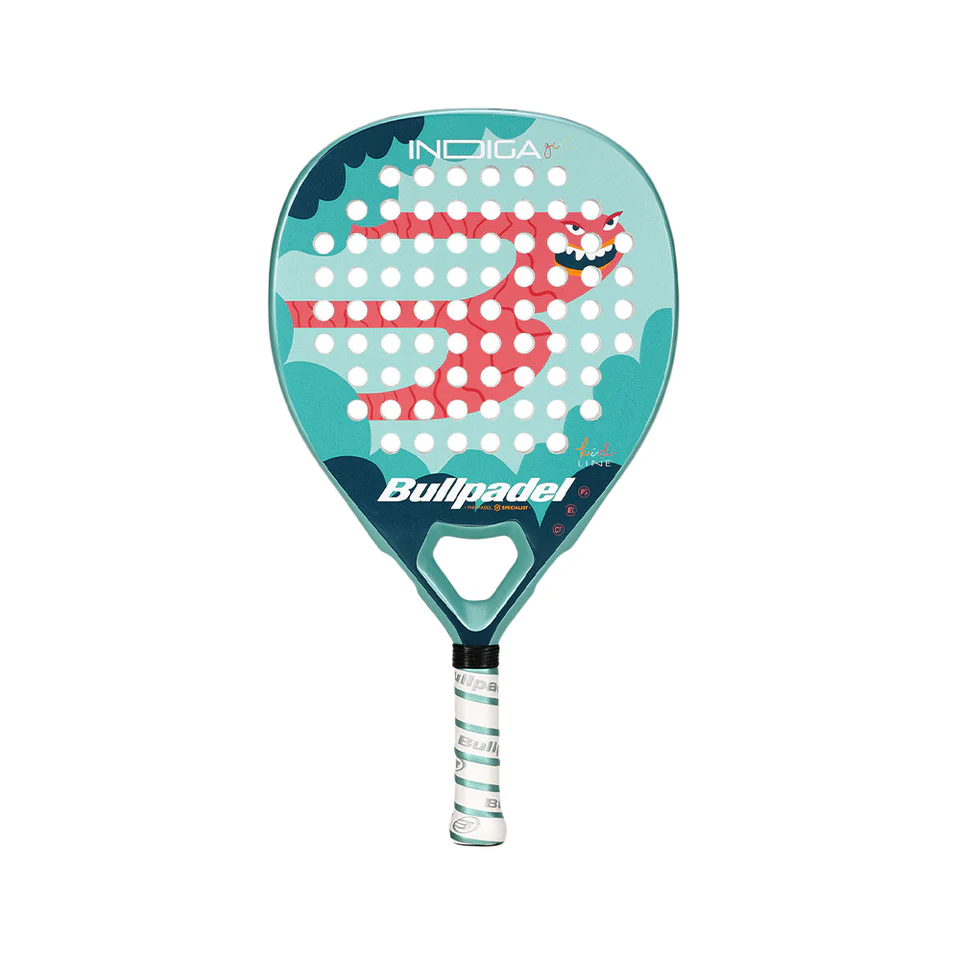
The Bullpadel Indiga series is the gold standard for absolute beginners. What distinguishes them is the innovative Grip Zone Matrix technology. This gives a designated area on the racket that highlights where the child should exactly place their non-dominant hand. And believe us, it's not a gimmick. This thing is super useful. Teaching good two-handed grip technique from the start helps your child to avoid undesirable habits later in his career. The visual guide significantly helps in learning when compared to verbal coaching alone. What's more? This racket weighs just 280 grams, and it comes with an ergonomic grip that ideally fits little hands. Moreover, the teardrop shape delivers medium balance and controlled power. There is also a Polyglass fiberglass face that offers a soft feel, while the black EVA core assures comfort with each hit.

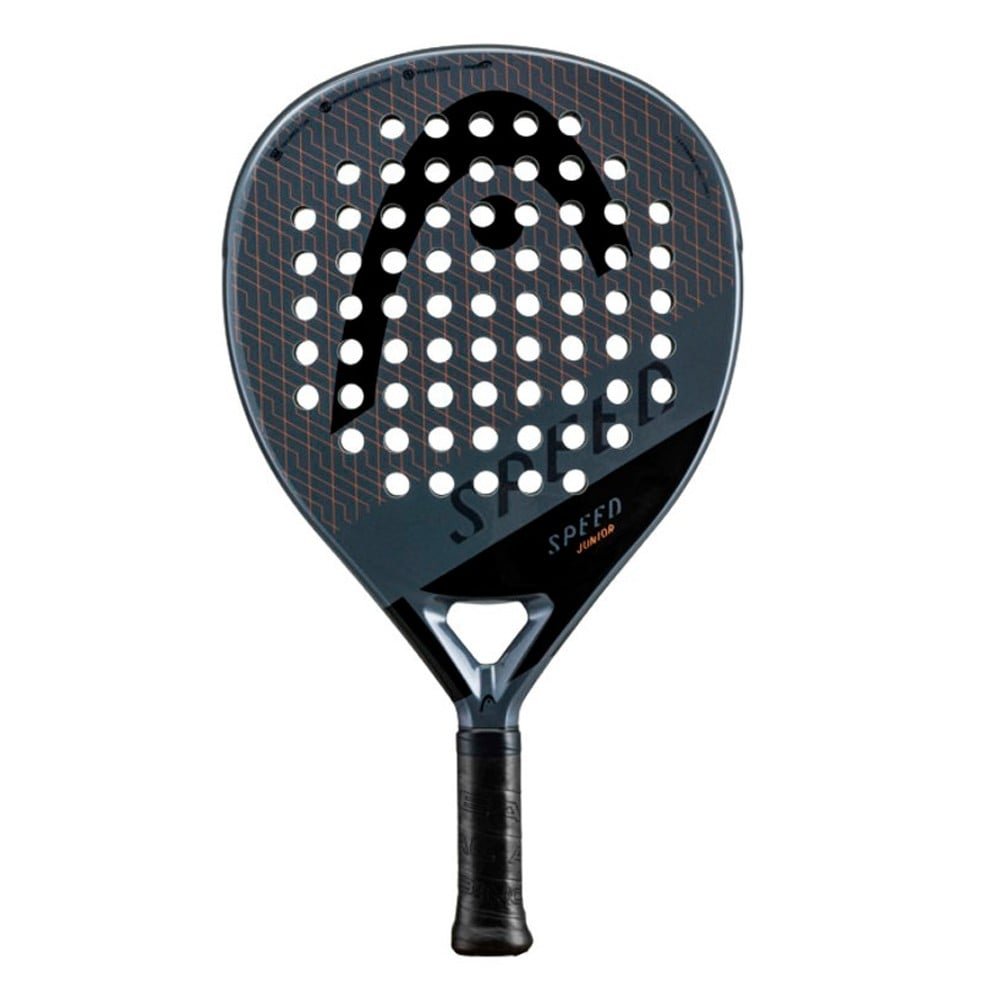
Head Coello Junior 2026

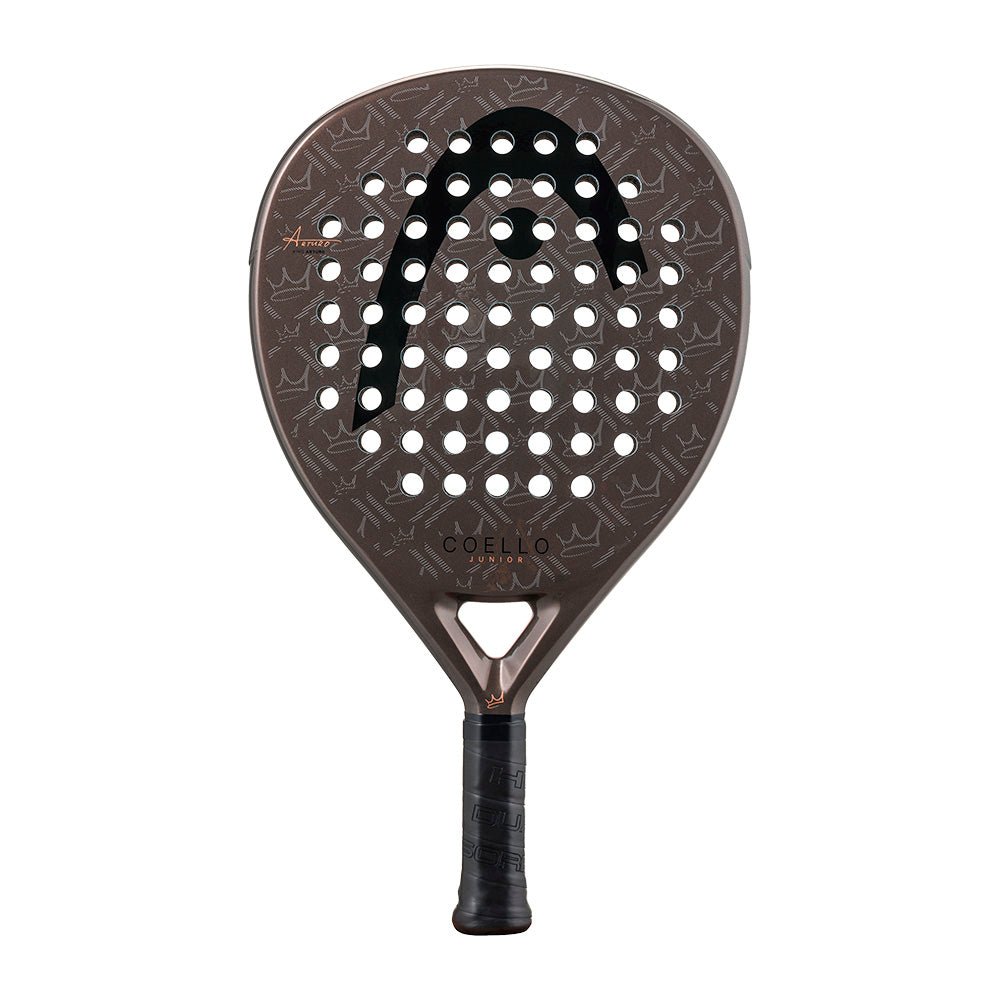
This racket is popular not just because it's one of the best junior padel rackets, but also because it's named after Spanish padel star Arturo Coello. That's why this one combines professional inspiration with junior specifications. This is a racket that connects children to role models. So, they get a dose of motivation. This racket has a teardrop shape with a larger sweet spot than diamond options while retaining offensive capability. The lightweight structure, weighing roughly 305-315 grams, makes handling easier for developing arms. Moreover, the racket comes with fiberglass faces that give a forgiving touch. Apart from that, the appealing design with Coello's trademark designs encourages youngsters to practice more actively. Overall, the Head Coello Junior 2026 is suitable for intermediate to advanced juniors aged 10-14 with a real interest in developing technique. The teardrop shape promotes skill improvement while allowing for sufficient room to ensure consistency.
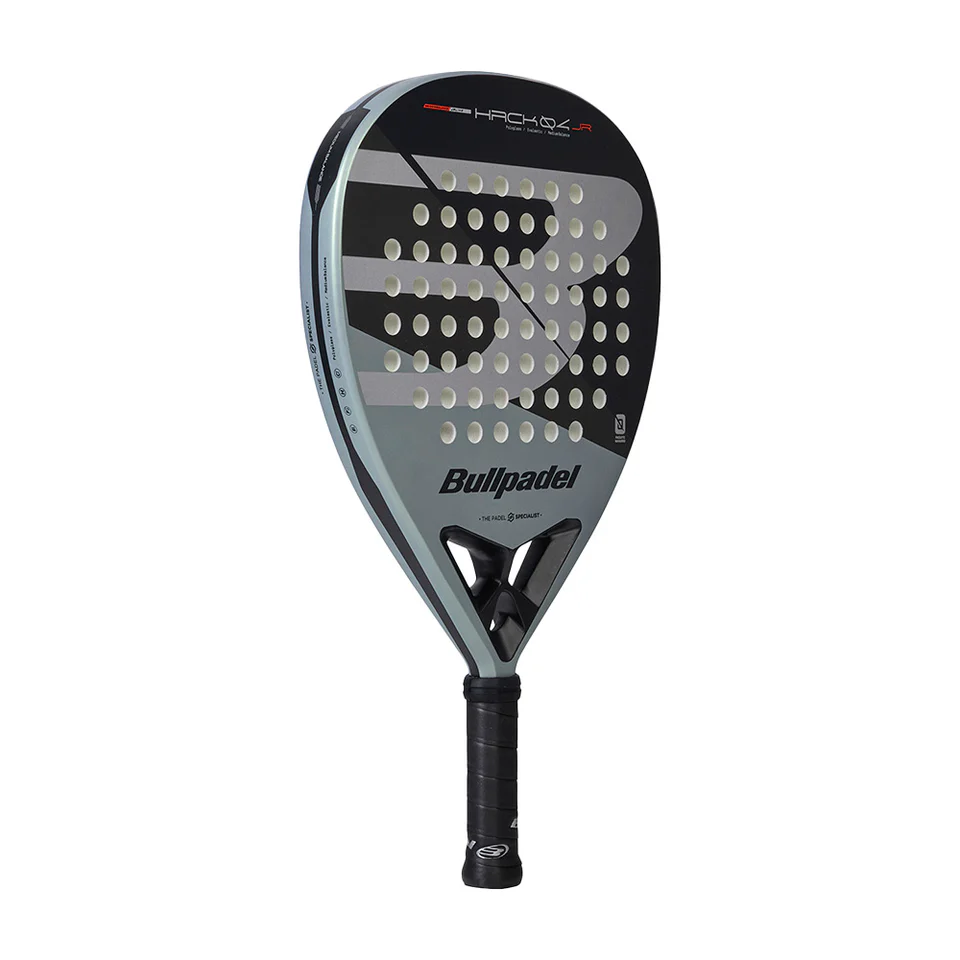
bullpadel hack junior 2026

Bullpadel Hack Junior 2025

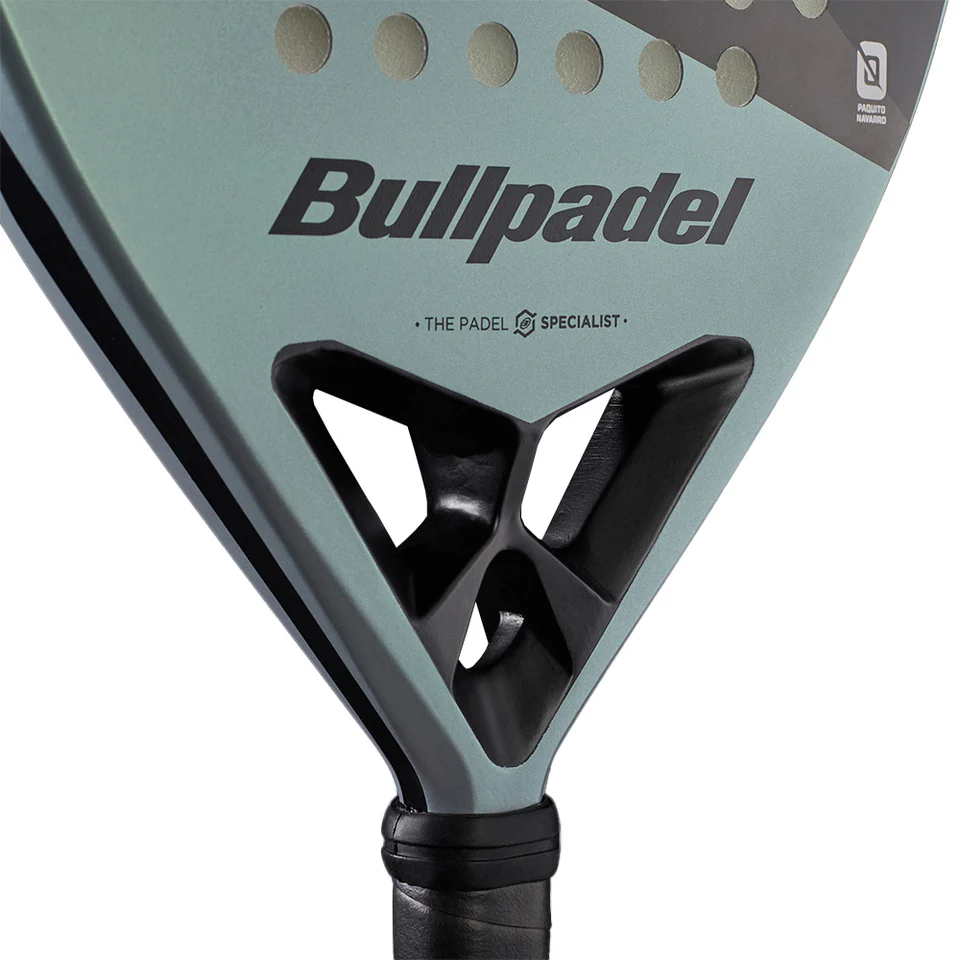
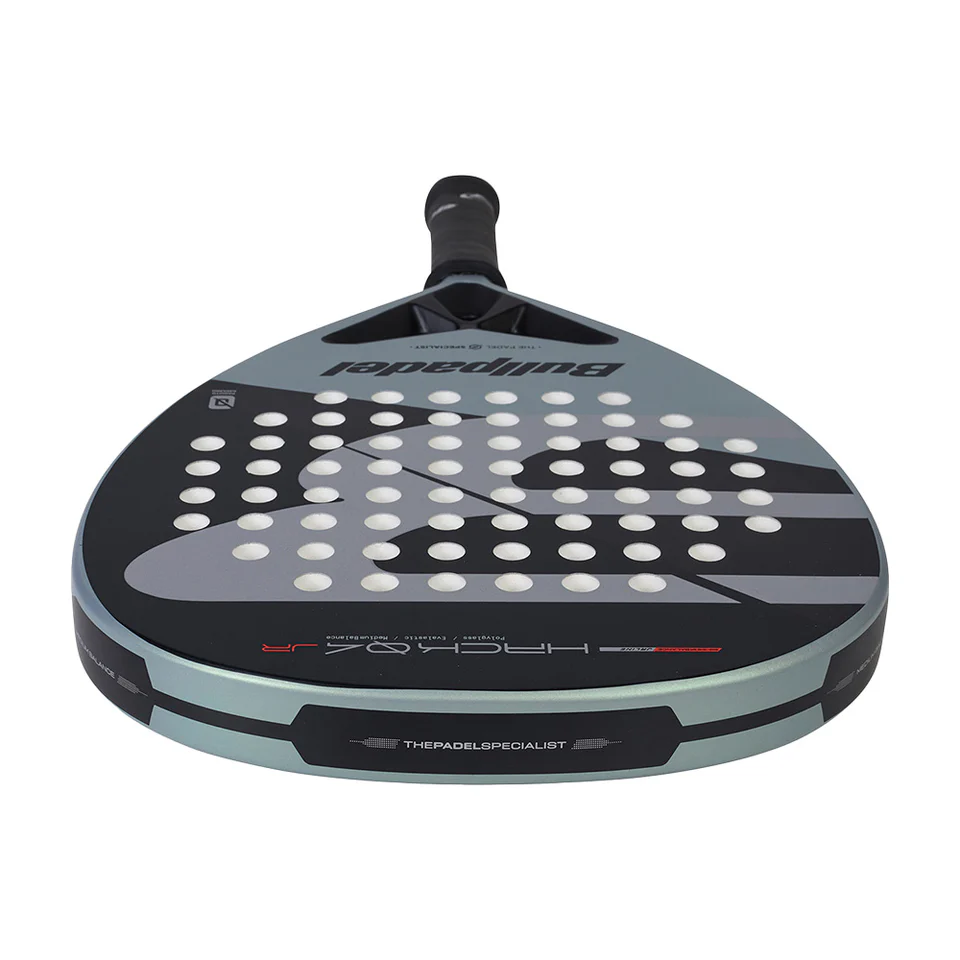
Paquito Navarro has made the Hack series super popular. The junior version of the padel racket from this lineup incorporates professional aesthetics into specs suitable for young players. The racket has a diamond shape, appealing to energetic young athletes seeking attacking capabilities. This one weighs roughly 345 grams, and we can say it's on the heavier end for junior padel rackets. That's why this one is a deal for physically stronger 12-14-year-olds who are ready for more difficult equipment. The fiberglass surface offers a regulated stroke feel, while the soft EVA rubber core efficiently absorbs vibrations to safeguard developing arms. The smooth texture makes it user-friendly for players who are still working on their technique. So, overall, this padel racket is best suited to dedicated juniors looking for more offensive racket qualities. The diamond shape requires more expertise than circular options, but it rewards excellent execution with true power.

Head Delta Junior

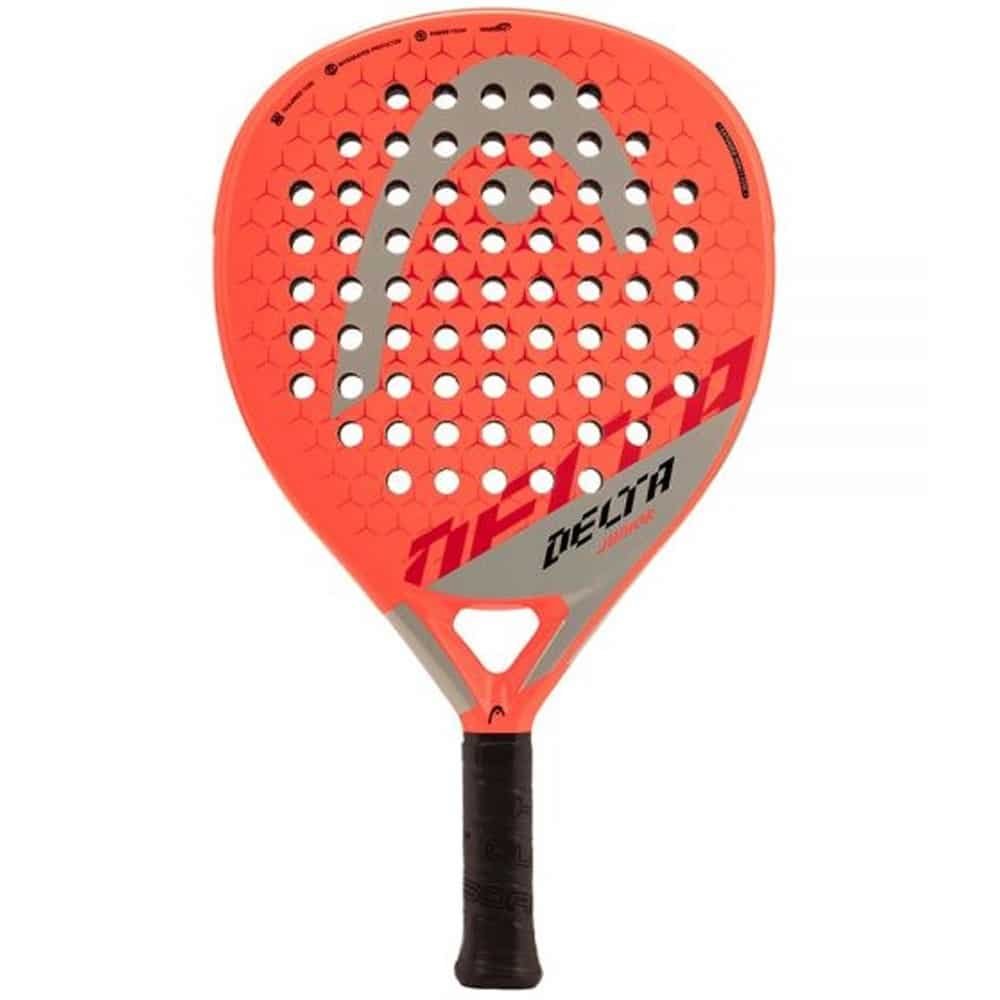
The junior player who wants a power-focused frame but doesn't want the hassle of using an adult model the HEAD Delta Junior 2022 padel racket can be a good option. With all of the attacking DNA of the Delta family in a lighter, more controllable weight, the Delta Junior 2022 is the ideal contenting racket for anybody looking to put a significant amount of spin on every ball. It swings easily and helps youngsters build racquet-head speed without putting a lot of strain on their arms because it weighs only 320g. For rallies, the teardrop shape offers natural force while being manageable. The racket offers better comfort and feel during play via a foam core and a softer striking surface.

Wilson Blade Junior V2

Young players who need a true performance feel without the weight and rigidity, the Wilson Blade Junior V2 Padel Racket is best for you. It comes in as a younger version of Wilson's popular Blade series, and the best part this one comes with the same features as the senior models. With its shorter length and narrower beam, this junior-focused racket is simpler for youngsters to swing and handle at rallies. With an average weight of about 300 g, it is noticeably lighter than adult rackets. Additionally, Wilson incorporates a moisture-absorbing Sublime Grip that helps with handling during extended sessions. There's also Sharp Hole Technology to increase ball bite and control.

How to Choose a Junior Padel Racket?

Not every child’s padel racket is designed with the same specifications. There are tons of options available in the market, and each one comes with a different USP. Picking kids’ padel rackets randomly can lead to the development of poor padel habits. That’s why you should be selective and follow these criteria to understand which is the best padel racket for your kid. 

1. Age, Height & Physical Traits

Choosing a good padel racket can be easy if you follow some points. Keep age and physical traits at the baseline. It won’t make much difference how skilled you are if you can’t grip a padel racket or if it’s too heavy. Using equipment made for more seasoned players might restrict technical development and strain the arms. Children require rackets that fit their body size. This is a thumb rule: a racket that suits their physical traits will enable easy swing naturally, get that time to hit the ball, and develop solid mechanics. At the junior level, control, comfort, and consistency are more crucial than authority.

2. Weight 

Simply throwing any of the junior padel rackets at your child? That’s injustice. Your child deserves the racket that suits his/her and weight plays a major part here. Generally speaking, players between the ages of 6 and 8 can use rackets that weigh between 280 and 310 g. These are lightweight. So, all the kids out in the padel space can control these rackets easily. However, if your child’s age group is between 9 and 11, you can go for a somewhat heavier range of 300 to 325 g. This much weight offers stability to all shots. Then, if your child is roughly 12-14 years old, opt for a padel racket weighing between 320 and 340 g. These are actually thin, adult-sized rackets, but still not too heavy as to aid in the increase of muscle. They come with the ideal weight distribution, putting a million miles between your child and potential injury.  

3. Shape

When it comes to padel rackets, shape plays a major role. It determines the performance of the racket. Round rackets are typically the ideal choice for young players because they offer supreme control and a larger sweet spot. They are easier to handle, highly responsive, and more forgiving. This makes it simpler to return balls cleanly, even if the contact is not ideal. On the other hand, teardrop shapes offer a blend of control and power. These are best for juniors who already have fundamental technique. However, diamond shapes are rarely recommended for youngsters since they are built for aggressive players with advanced timing and power. In most cases, younger players’ rackets should be round or somewhat hybrid in form.

4. Materials 

Shape and material both have equal significance. Younger arms tend to favor softer compositions. Fiberglass rackets are flexible, flexible, and flexible. We refer to it as the finest for beginners for this reason. A carbon-fiberglass mix is ideal for intermediate juniors who need a little more responsiveness without sacrificing comfort. On the other hand, full carbon rackets are harsher and less forgiving. So, make sure your child is a competitive player or a highly dedicated talent if you go for full carbon rackets. With the right material, kids can feel the ball without worrying about their arms vibrating too much.

5. Commitment

Consider the amount of commitment your child has to the game. Ask yourself honestly how frequently your kid plays. If they only play sometimes, a simple entry-level model is enough. If they train on a weekly basis, a mid-range racket with higher-quality materials and balance is useful. In case your youngsters compete frequently, a higher-performance model intended for serious training makes sense.

Padel Rackets for 6-8-Year-Olds

This age group needs especially careful equipment selection because your child is too young, and it’s his/her introduction to the game. Weight becomes vitally crucial. So, make sure you look for padel rackets for 6- and 8-year-olds that weigh less than 280 grams. Anything over this increases arm strain and actively discourages participation.

Moreover, you need a racket that offers maximum forgiveness. Generally, you should look for round-shaped rackets with big and centered sweet spots. This will allow your kid to make continuous contact and get a boost in confidence. 

Here are some of the best junior padel rackets for 6- to 8-year-old children:

  • Adidas Drive Junior 
  • Bullpadel Indiga Boy/Girl 
  • Babolat Contact Junior

Padel Rackets for 10–12-Year-Olds

During this period, youngsters gain true talents, tactical insight, and perhaps significant commitment to the activity. So, the junior padel rackets can be a bit heavier than those of the previous age group. Weight rises precisely. Padel rackets for 10- and 12-year-olds normally weigh between 320 and 340 grams. Increased bulk gives more stability and power as physical strength grows organically.

However, remember this: don’t switch to heavier rackets simply because other youngsters do. Your child’s physical development is more important than peer comparison.

The shape options expand logically. While round remains the safest option, physically skilled players may want to look at teardrop designs that offer slightly higher sweet spots and minor power gains without putting too much strain on the body.

Here are the best padel rackets for children from this age group:

  • Head Delta Junior
  • Dunlop FX Control Junior
  • Bullpadel Indiga

Padel Rackets for 12–14-Year-Olds

Now, at this age, children can move to adult equipment, depending on physical development and commitment level. Physically mature 13-14-year-olds playing competitively may switch to lightweight adult rackets, weighing around 350-360 g.

How do you know your child is ready for adult equipment? Signs of readiness include a height of 160 cm or more, consistent technique across all shots, a minimum of three times per week of play, physical strength to handle 350 g or more, and true competitive tournament motivation. That’s all. 

Here are the best junior padel rackets for this age group:

  • Head Delta Junior 
  • Dunlop FX Control Junior

Gear Up 

The most expensive or high-end junior padel rackets aren’t always the best. Those are the ones that correspond to the size, strength, and developmental stage of your child. Your child will recover more quickly, have fewer injuries, and enjoy playing more if you spend money based on circumstances rather than hype.

But finding the best offers is also important. So, to get the best junior padel rackets at the best rates, check out the promotions on our site. Also, to know what the rackets actually offer, you can check our extensive evaluations.  

Frequently Asked Questions 

Q1) How heavy should a junior padel racket be?

Ans: The padel racket for children is of a different weight depending on age and progress in the game. The maximum weight for children <8 is 240-280 g. Age 8 to 10:30-310 g, age 10 to 12: 310-330 g. For the age range of12 to 14, the racket weight would be between 330g and 350g.

Q2) Do boys and girls require separate padel rackets?

Ans: There are no functional differences between padel rackets for boys and girls. Specifications should correspond to age and skill level, independent of gender. Some manufacturers offer visual differences targeted toward different genders, although performance attributes remain consistent.

Q3) Should I purchase expensive kids’ rackets if they will outgrow them?

Ans: The amount invested is determined by the level of commitment. Casual, occasional players can go with cheap choices, typically £40 to 60 padel rackets. If you are going through regular training 2-3 times per week, a mid-range racket costing £60 to 80 promotes skill improvement. If you are into competitive play, demonstrating true passion, you can go with premium models priced between £80 and £100. 

Q4) At what age can kids play padel?

Ans: Children can start playing padel from the age of 4 or 5. However, at this early age, they need proper equipment and expert guidance. Most clubs offer structured junior programs beginning at six years of age. 

Q5) When should my child upgrade to an adult racket?

Ans: Consider adult rackets when the following requirements are met: age is 13-14+, height 160 cm+, consistent technique across all strokes, regular play, physical strength for 350 g+ weight, and true competitive interest.